

An engineering manager job description should let a qualified candidate answer three questions before the first call: What problem will I own? How will I work with this team? What evidence will show that I am doing the job well?
Ask two members of the hiring team to answer those questions separately. If their answers differ, the description is not ready. Resolve the disagreement before opening the role, or candidates will interview for different versions of the same job.
What should an engineering manager job description make clear?
Start by naming the operating problem, not the title. An engineering manager stabilizing a core platform has a different mandate from one opening a product area, integrating systems after an acquisition, or rebuilding delivery reliability. The description should name which situation the person is entering and which outcome they can change.
In hospitality technology, "own delivery" can hide several different jobs. One manager may be responsible for a customer-facing ordering platform that has to stay available during peak service. Another may own integrations between venue systems, payment providers, and internal operations. If uptime, on-call response, rollout coordination, or partner dependencies shape the work, put them in the description. Those conditions affect who should apply and how the team should evaluate them.
The role should reflect the real mix of technical and management work. O*NET describes computer and information systems managers as people who plan, direct, or coordinate work across information systems and programming. Its task list includes reviewing project plans, assigning and reviewing work, coordinating with stakeholders, and participating in staffing decisions. Use that as a prompt to separate the responsibilities that matter for this specific role from a generic list of technologies. O*NET OnLine
Which six details make a role assessable?
- What outcome should improve? Name the problem and what progress looks like.
- Who is already on the team? Include team size, functions, reporting line, major partners, and whether the manager inherits or builds the team.
- Which decisions belong to the manager? State what they decide independently, what requires discussion, and who has the final call on priorities, architecture, and people decisions.
- What technical terrain shapes the work? Name the systems, constraints, integrations, reliability expectations, or regulated requirements that matter.
- What operating conditions will they inherit? Include on-call expectations, travel, time-zone overlap, remote or hybrid setup, and delivery pace.
- What evidence will count as success? Use observable outcomes for the first 90 and 180 days.
If the hiring team cannot answer all six in the same way, stop and resolve the differences before publishing the role.
List a tool as required only when not knowing it would block the first 90 days. Otherwise, describe the environment and test whether the candidate can learn within it.
How should you separate requirements from preferences?
A long requirements list often hides the hiring decision. Put every item in one of three columns: prerequisite, teachable in context, or preference. A prerequisite stays only if the hiring team can name the evidence it will test in an interview or work sample. If nobody can explain how the requirement changes the person's ability to do the work, move it to preference or cut it.
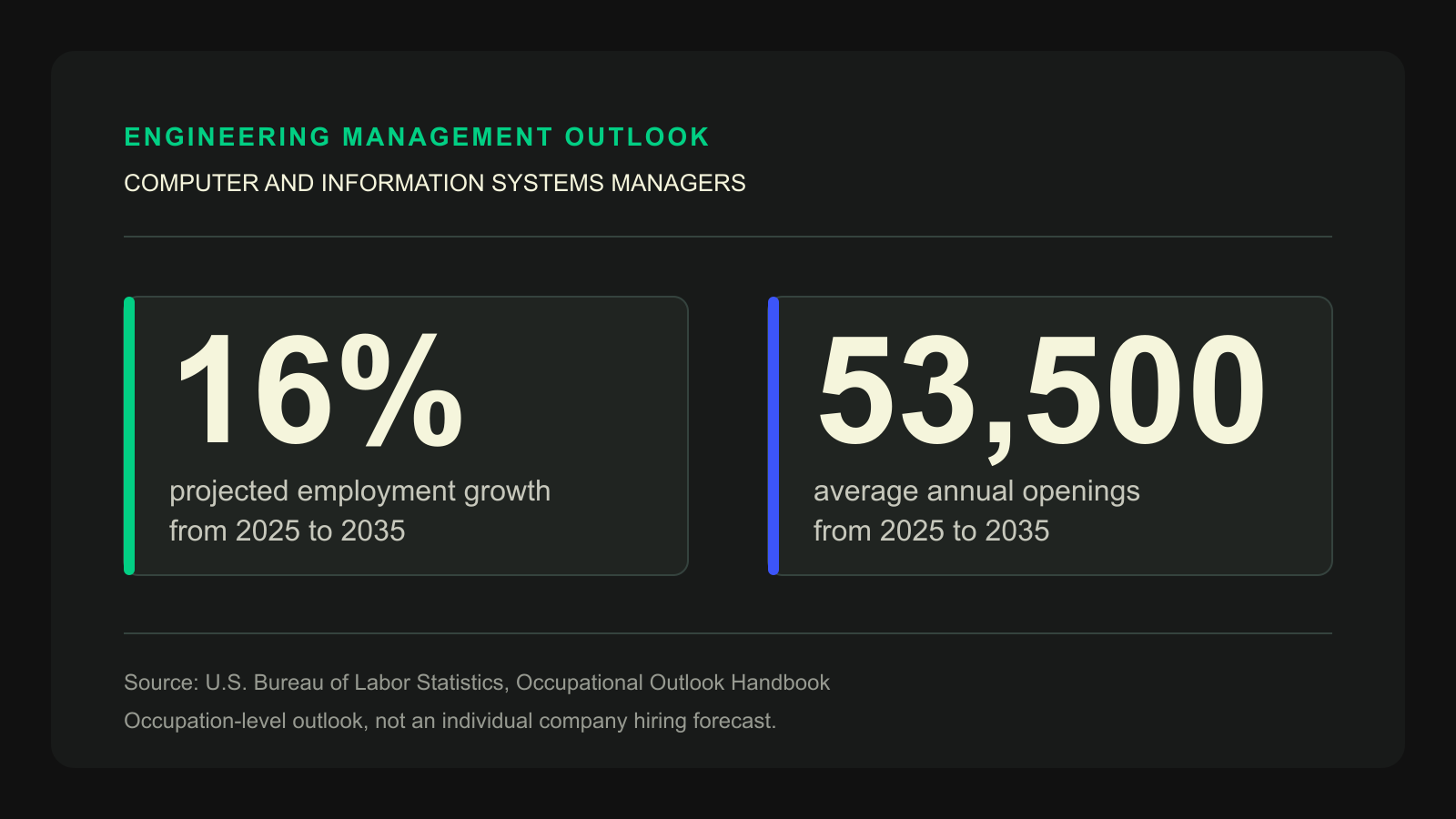
Market data should not decide which requirements belong in one role. The U.S. Bureau of Labor Statistics projects employment of computer and information systems managers to grow 16% from 2025 to 2035, with about 53,500 openings a year on average. That is occupation-level context, not evidence that a clearer job description improves hiring. Use it to understand the size and direction of the occupation, then return to the role-level decisions a candidate can evaluate: decision rights, operating constraints, and 90- and 180-day outcomes. U.S. Bureau of Labor Statistics
How do you make the hiring process match the role?
The description sets the assessment. If it says the role must improve cross-functional delivery, ask for an example of a real tradeoff involving product, operations, or another stakeholder. If it says the person will guide technical direction, use a discussion or work sample that tests judgment, not only recall.
Before posting, ask someone outside the hiring team to read the description and answer:
- What would I own?
- Who would I work with?
- What would make this role difficult?
- What would success look like?
If those answers are unclear, the description is not ready yet.
What belongs in legal review rather than content polish?
This article is not legal advice. Hiring requirements and interview questions should be reviewed for the applicable jurisdiction and role. The EEOC guidance uses the standard "job-related and consistent with business necessity" when discussing employment practices. U.S. Equal Employment Opportunity Commission
FAQ
How long should an engineering manager job description be?
Long enough to explain the work, operating context, decision rights, and evidence of success. Length by itself does not make a description useful. The test is whether a qualified candidate can understand the role well enough to decide whether it fits.
Should every technology in the stack be listed as a requirement?
No. Name the technologies and constraints that materially shape the work. Separate genuine prerequisites from tools a strong candidate can learn in context.
What is the difference between an engineering manager and a director of engineering job description?
The difference should come from scope, not the title alone. Define team size, decision rights, ownership across functions, technical accountability, and the problems the person is expected to solve.
How should a job description define success for the first six months?
Tie success to the operating constraint named in the brief. For a hospitality platform, 90-day evidence might be a clear incident-ownership map across engineering, venue operations, and external partners. A 180-day outcome might be a rollout process with defined release windows, escalation paths, and decision owners. Choose outcomes the interviewer can trace back to the role's mandate.
What should a hiring team agree on before publishing the role?
The team should agree on the problem being solved, the non-negotiable evidence for the role, the decision rights, and the interview process that will test those things.
What should you do before opening the role?
Put the six answers in front of every interviewer before the role opens. If the answers change from person to person, keep the req closed until the team agrees.
Bring those six answers to a 15-minute TechOpX staffing fit check. The team uses that role context to vet contract or permanent candidates through an operator's hiring lens, not a keyword match.

