
By Justin Boykin, founder of TechOpX.
Before you hire a contract engineer, define their first job and check that your team can help them do it. Make sure they can get into the right systems and have someone to answer questions and review their work.
Use this guide and the downloadable pack to plan the start. It helps you spot what's missing before the engineer starts and name who will fix it. The examples focus on restaurant and hospitality tech.
Before you look for candidates
Decide whether you need someone to build a known fix or find out what's going wrong. Those jobs can call for different skills, even when they use the same tools.
For example, "improve ordering reliability" could mean fixing a known bug. It could also mean finding out why orders go missing, with help from a vendor. Pick the job you need done before you compare candidates.
You don't need to know the cause before hiring someone to find it. You do need to say what they should look into, which systems they can use, and who can act on what they find.
If you need someone to build a fix, decide who will answer design questions. If your tech lead must explain every task, check that they have time to do it. Even a senior engineer needs help with company rules and decisions they don't own.
The restaurant integration hiring guide explains what to look for in a candidate. Use it to define the role, then check whether your team can support the work.
Check what needs someone else's help
Some work depends on a vendor or someone on your team. Check who can grant access and approve changes before you plan work that needs their help.
For example, Toast gives integration partners test access after the required approvals and partner agreement are done. Access to live systems comes later, after certification. If you work with Toast, check which process fits your project. A custom integration for one restaurant may follow a different route.
GitHub lets teams require approval before a release job runs. If your team uses that rule, name the reviewer and confirm their time. Plan the engineer's work around that review.
GitLab suggests choosing a buddy who's available during the first two weeks. That guidance is for employees. For a contractor, agree on who will be around to help when they get stuck.
For each item, write down who needs to act and which work will wait. Ask that person to confirm the date. Don't treat a date you picked for them as a promise.
Can they start while something is still missing?
They can start if you agree on useful work they can do with what they have. If the missing item blocks that work too, sort it out first or change the assignment.
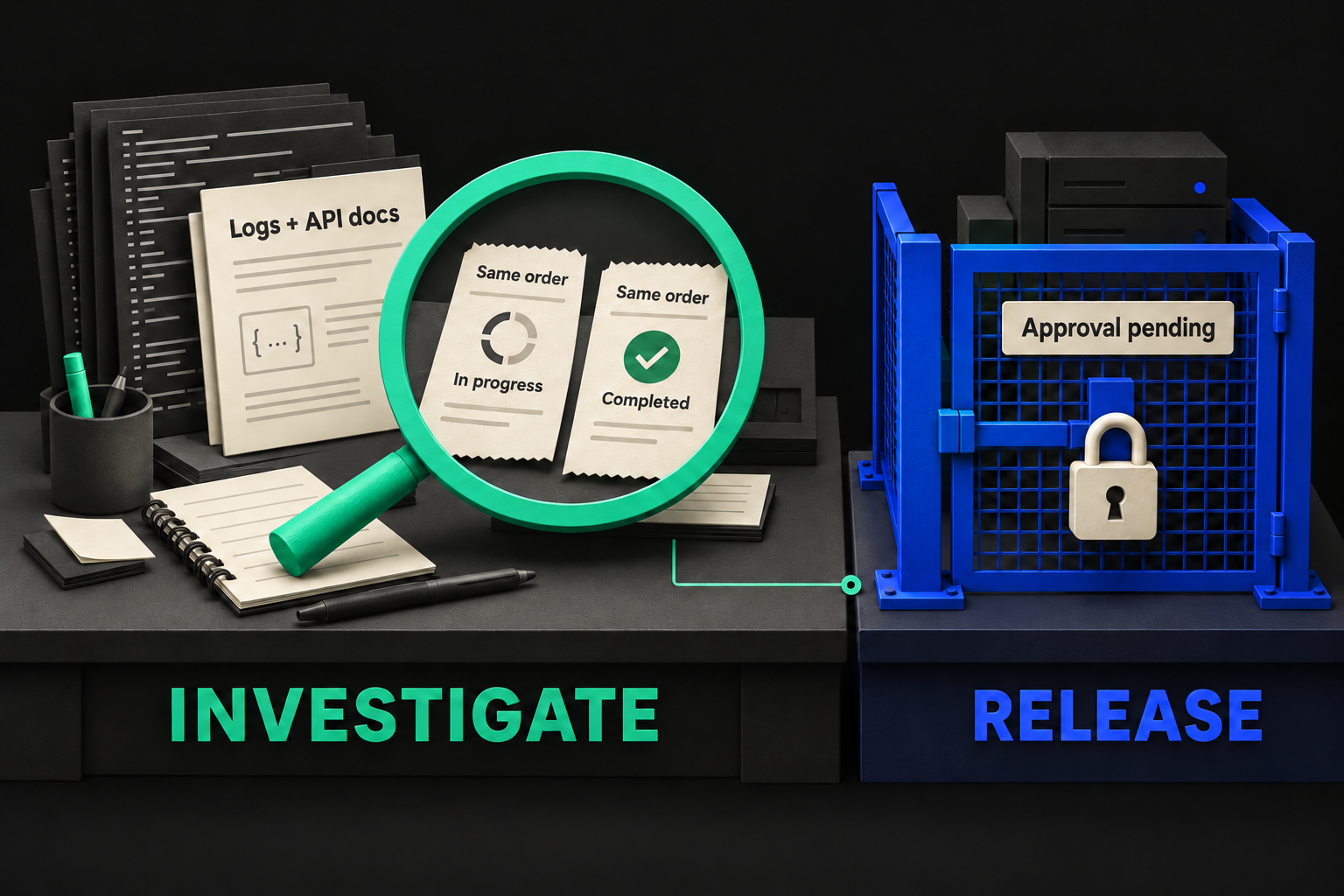
Example. Suppose a restaurant tech team needs to find out why order statuses sometimes don't match. The engineer can read the approved application logs and the API docs, but can't yet make changes to the live system.
They may be able to map how an order's status changes and find a likely cause. They need enough detail in the logs and someone who can explain how the app should behave. That work can help the team plan a fix while release approval is still pending.
If the assignment is to release the fix, they need the right approvals and a place to test it. And if the logs don't show enough detail to find the cause, even the first task may have to wait.
Check what the missing item stops you from doing. Waiting for a release approval may still leave room to investigate. Missing logs may block the investigation itself.
Visual workflow: choose the next step
Before you look for candidates, define the job and the help your team can offer. Before work starts, check what the engineer needs for their first task. Before a change goes live, check the tests and approvals. Make each decision when it applies to that work.
Check again when the job changes or something the engineer needs is no longer available.
Use the readiness pack
Download the readiness pack (PDF). It brings the workflow, fillable checklist, open-item plan, and worked example together. Download it to fill it in and save your answers, or print a copy.
Fill it in with the hiring manager and tech lead. Confirm with your provider what they will handle. Ask the person who grants access or approves a release to confirm their part of the plan.
Start with one assignment. Write down the first result you need and who decides whether work can start. Use these checks to fill in the pack:
Mark each item Ready, Needs action, or Not needed. Only mark it Ready when you've checked that it works. Explain a Not needed choice. Say whether the item must be ready before you look for candidates, before that task starts, or before a change goes live.
For each open item, name the work it blocks and what the engineer can do while they wait. Record who will sort it out, the date they agree to, and when you'll check again. If the plan is "read the docs," say what question the reading should answer and who will use that answer.
NIST's software security guidance calls for clear roles and secure places to build and test code. Follow your team's access and security rules as you fill in the pack.
Use the contract engineer budget worksheet to plan your team's time, too. Your lead still needs time to review the work. If they can no longer help as planned, check whether the assignment or start date needs to change.
Check the plan again when the work changes. Finding the cause of a bug and releasing the fix may need different access and approval. Agree on those needs before moving to the next task.
Bring your plan to the staffing discussion
Bring the first assignment and the list of things still missing. Explain how much help your team can offer. This helps you and the staffing provider decide how much guidance the engineer will need and what experience to look for.
TechOpX's staffing page explains how we source and vet engineers. Use your plan to discuss the role. Agree with your provider on what they'll handle and what your team needs to do before work starts.

