
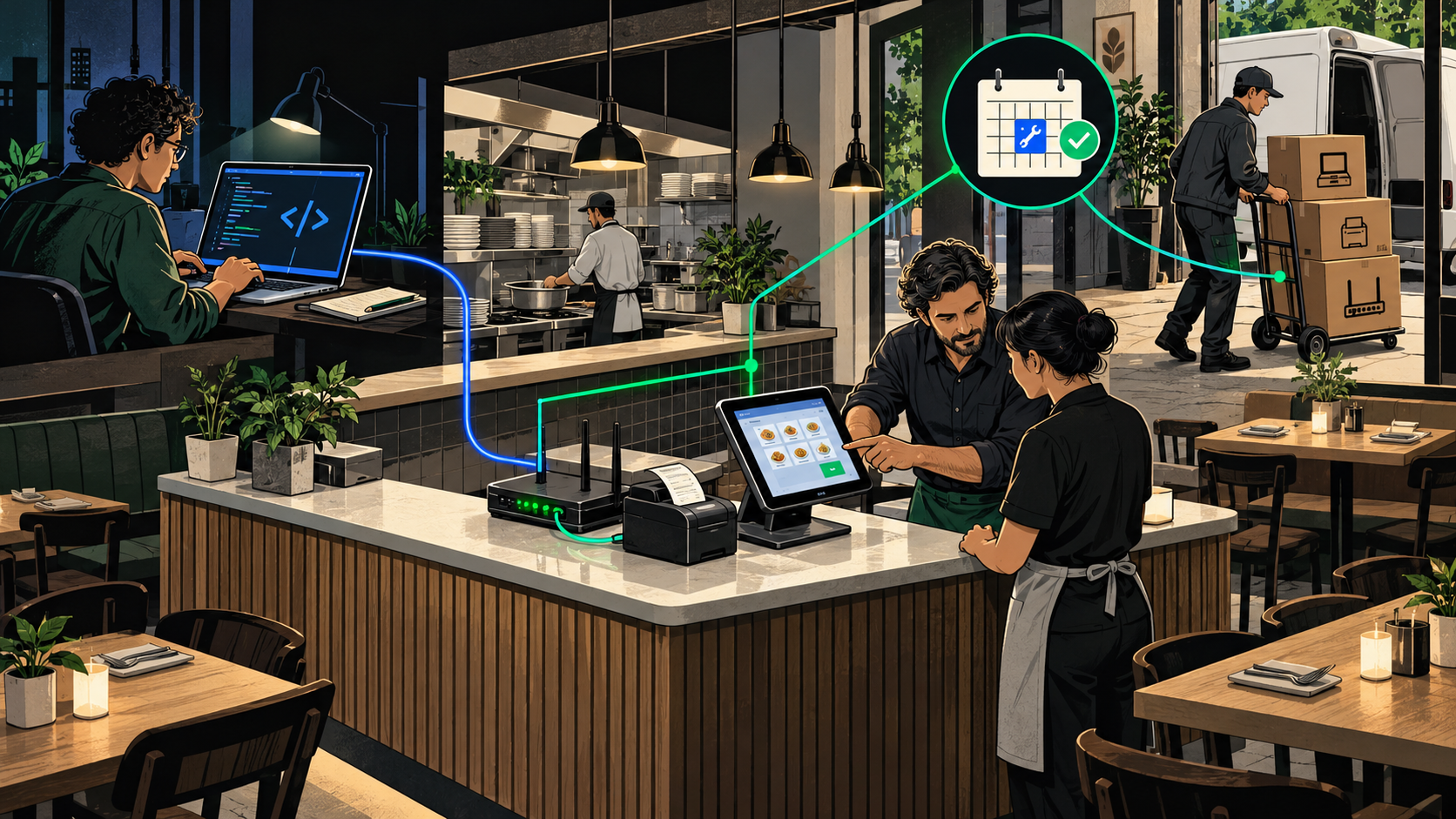
Someone who built point-of-sale software and someone who rolled it out across restaurants can bring very different experience to a hiring conversation. "Knows POS" doesn't tell you which work the person has done or what they can take over from your team.
A brand might have working software and still need someone to coordinate site preparation and staff training. Another might have a capable implementation team but need an engineer to fix a connection between systems. Those searches should ask for different evidence.
What work needs an owner before you hire?
List the work between the current setup and a restaurant that can operate with the new system. Include work handled by a provider so your team can see where its responsibilities start and stop.
For a point-of-sale rollout, the list may include network preparation, menu setup, device installation, and staff training. A separate software change may need development and testing. Confirm the actual scope with the providers involved rather than assuming all of it comes with installation.
Toast's remote and onsite onboarding guide includes setup, training, hardware installation, and go-live activities. It also asks the restaurant to assign someone to manage onboarding. That's one provider's documented process, and the support included depends on the arrangement you have.
A vendor contact and a brand owner have different jobs. The vendor can confirm its own appointments and deliverables. Someone on your side still needs to bring together the decisions and work that sit across the brand's teams and providers.
Which experience does each part of the rollout need?
Use the work to choose the role, then test the candidate's personal contribution. Titles vary between businesses, so treat these role labels as a starting point for the brief.
One person may cover several areas in a smaller rollout. Confirm their authority and available time rather than making the combined job an assumption. Technical skill alone doesn't give a person control over a vendor's schedule or a restaurant team's training.
For hands-on software work, use the restaurant integration engineer hiring guide to assess technical ownership. This role map answers the earlier question of whether software engineering is the main gap at all.
Who can approve the work and stop a launch?
The rollout coordinator needs a named decision owner for each important check. That person might approve technical readiness, confirm restaurant readiness, or authorize a change to the launch date.
Write down who completes the work and who accepts it. Include the evidence they need to see. "Vendor confirmed ready" is incomplete if the restaurant still can't carry out an order through its normal service setup.
NIST's software-development guidance calls for documented roles and responsibilities across the teams involved. That guidance concerns secure software development. The related hiring question is whether your software and release responsibilities have named people before you assign them to a new hire.
The coordinator doesn't need to approve everything personally. They do need to know who can make a decision, how to reach them, and what happens when a check fails. Put that in the rollout plan while the people involved can still change their schedules.
What would this look like for a restaurant brand?
Suppose a restaurant group is replacing its ordering setup across several locations. The existing integration works in testing, and a provider will install the devices. One location still needs network work, while another hasn't scheduled manager training.
In this example, another integration developer may leave the immediate problem untouched. The group needs someone to coordinate the unfinished site work and confirm who will approve each location. If testing later reveals a software fault, the plan also needs an engineering owner who can investigate it.
Write the next decision beside the blocked work. For the network work, that might be a site visit and a readiness check. For training, it might be a confirmed session with the people who will operate the system. A vague "waiting on vendor" status won't tell the coordinator what to do next.
Keep software release checks separate from installation appointments. Microsoft's safe-deployment guidance describes gradual exposure, health checks, and halting a deployment when problems appear. That is software-deployment guidance, rather than a restaurant installation plan. Use the applicable checks with your technical team when the rollout includes software changes.
What belongs in the hiring brief?
Describe the gap the person will fill, including where their authority ends. If they will coordinate several providers, say which decisions remain with the brand and what help they will have from operations.
Include the kind of rollout, the location differences that matter, and the support expected during launch. Ask candidates for an example that matches those conditions. Someone who supported an established system in one location may need different help from someone who has coordinated a rollout across locations.
Before agreeing a start, use the contract engineer readiness guide to confirm access and team support for the first assignment. The same practical check applies here. A new hire needs people who can answer questions and approve the work they don't control.
Bring the work-to-role map to the hiring discussion. Use the rollout responsibilities to discuss what experience your team needs to add.

